In my early days in the newspaper business, it struck me that there was a lot of morbid terminology associated with the business:
•The morgue (a place where past issues of newspapers were kept);
•Cutlines (what most people would call a photo caption);
•Deadlines (the bane of all procrastinators);
•A beat (the issues a reporter covers);
•Kill a story (to not publish it).
But the most sinister thing newspaper journalists had to deal with had a mundane name: microfilm.
Back before this magical thing we take for granted called the internet came about, doing research was akin to excavating an Egyptian tomb with a toothbrush.
For the uninitiated, microfilm (stored at either the newspaper’s office or at a local library) is essentially a long reel of pictures of, in this case, past issues of the newspaper.
A reel would typically contain either a month (or more) of past issues. The film would be spooled on a viewer and then, a page at a time, you could view an image of the paper.
If you didn’t have a known date you were researching, finding a specific item could take, literally, days. Even then, only some microfilm viewers allowed you to print a copy of the page, so you would just have to take notes, or for the more ambitious of us, take a photo of the page (which you then had to have developed – another blast from the past).
Not only was the process tedious, scrolling through countless pages and staring at a dark screen for hours on end was a quick path to nausea, headaches and eye strain.
It was also not uncommon to spend hours going through microfilm without finding what you were looking for.
The Daily News still has a microfilm room – a relic of the past that has probably not been used for its intended purpose in decades. (It’s not open to the public, by the way).
Today, of course, we not only have electronic versions of past newspapers, articles and photos, searching for information is as easy as picking up your phone.
The great research tool, the newspapers.com website, allows you to search specific words, dates and newspapers from across the globe, with results back in seconds.
Aside from microfilm, another bygone tool for information was the reference librarian at your local library.
If you needed to know (pre-internet) what the capitol of Mozambique is, the population of Canada or a list of Kentucky governors, you’d call the reference librarian, who had a slew of almanacs, encyclopedias and other materials on hand to answer the public’s questions.
Of course, the librarian did not have all the answers, and was only accessible during work hours.
Still, using the librarian was a much more pleasant task than having to head toward the microfilm room, where frustration and physical discomfort were enough to make you wish you were in the morgue.
•Did you have a fallout shelter at your home, or know of one in the region? We are working on a story about fallout shelters and would love to talk to you. Please reach out to the email below.
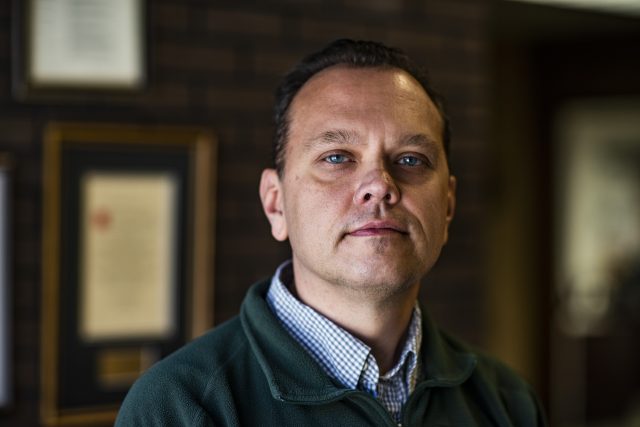
– Wes Swietek is the Managing Editor of the Daily News. He can be reached at wes.swietek@bgdaily news.com